Robot learning researcher · PhD candidate, KIT

Maximilian Xiling Li.

I give robot policies interpretable building blocks: concepts for what they perceive, primitives for how they move.

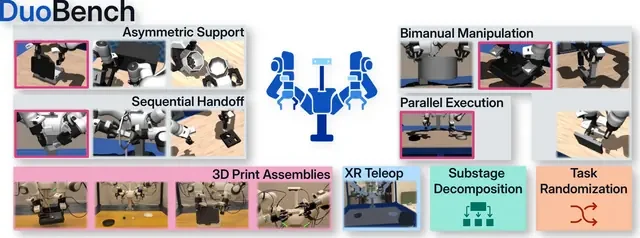
PhD researcher at the Intuitive Robots Lab, Karlsruhe Institute of Technology, advised by Rudolf Lioutikov, with papers at CoRL, CVPR, ICRA, RSS and NeurIPS. As one of the lab's first PhD researchers, I have helped build it up since its founding in 2022, including its bimanual robot learning stack, from WebXR teleoperation and data processing to policy deployment. In 2025 I interned at Poke & Wiggle, working on MLOps and vision-language-action models for robots.

  • Imitation learning
  • Visual affordances
  • Movement primitives
  • Explainable AI
Portrait of Maximilian Xiling Li
Karlsruhe, Germany

Research

Concept-aware robot policies

My research asks how robots can extract richer information from available data rather than simply requiring more of it. Starting from explainable AI, I arrived at the idea that grounding policies in human-understandable concepts can also make them more robust. Under the theme of Concept-Aware Robot Policies (CARP), I investigate how underutilized concepts such as visual affordances and force-aware action representations can improve manipulation.

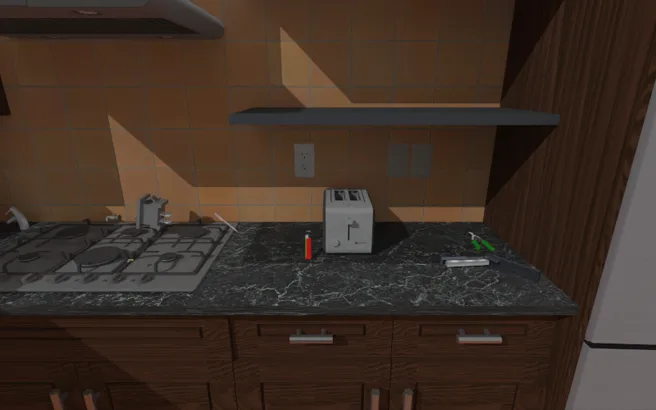
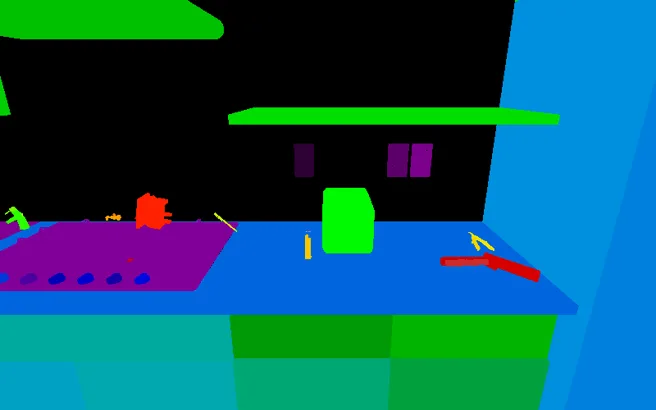
Segmentation masks of a simulated kitchen scene from the MOPS dataset MOPS segmentation
01

Visual affordances & scene understanding

Perceiving what a scene affords and how it is structured: affordance detection on 3D point clouds, structured image representations, spatial annotations from demonstrations, and photoreal simulated data for robot vision.
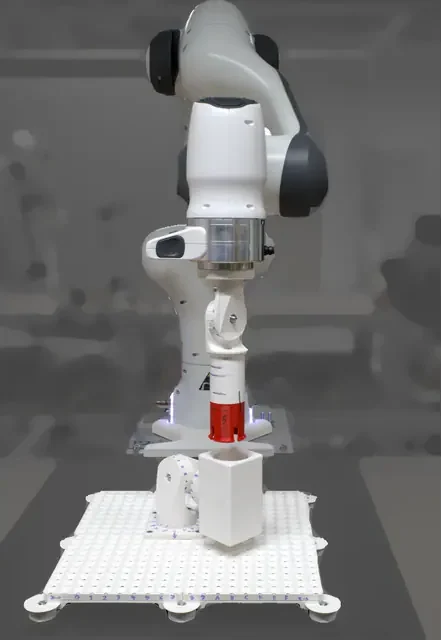
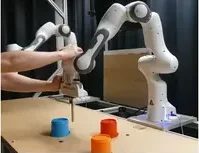
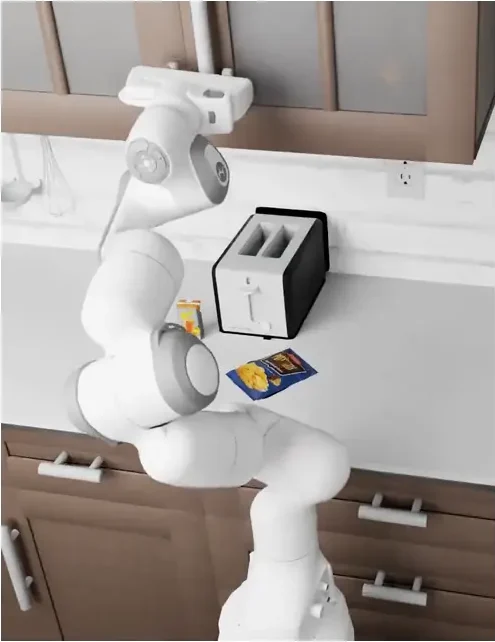
Robot arm performing a force-aware insertion task FA-ProDMP
02

Force-aware actions

Probabilistic movement primitives that take force into account and replan on events, for manipulation tasks where contact matters.

HyperPG
03

Interpretable latent structures

Prototype models that organize the latent space around learned, inspectable prototypes, so each prediction can be explained by comparison to them — including HyperPG, probabilistic prototypes on the hypersphere.

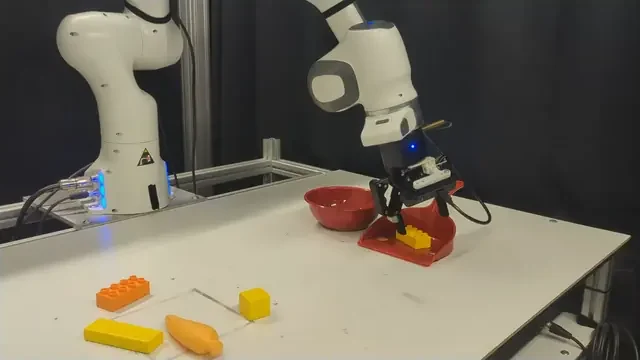
Robot arm learning a manipulation skill from human demonstration Versatile skills
04

Versatile imitation learning

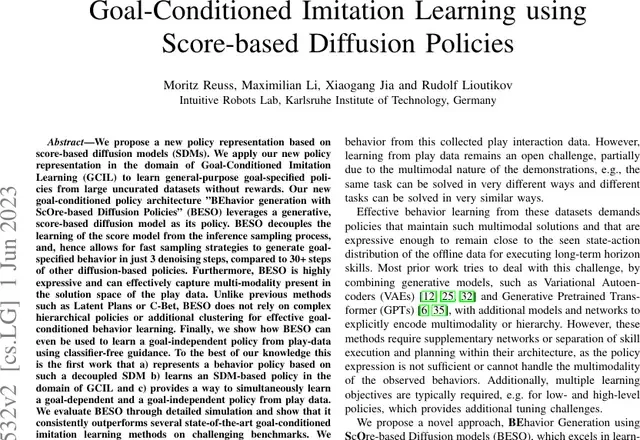
Learning diverse, multimodal behavior from human demonstrations with curriculum-based mixtures of experts and score-based diffusion policies.

Selected publications

Recent publications

Curriculum vitae

Experience & education

Experience

  • 2022 – now
    PhD Researcher

    Intuitive Robots Lab, Karlsruhe Institute of Technology. Advised by Rudolf Lioutikov. One of the lab's first PhD researchers, helping build it up since its founding in 2022. Robot learning for manipulation: imitation learning, diffusion policies, affordance detection and force-aware movement primitives.

  • 2025
    Intern, MLOps & Robot VLA

    Poke & Wiggle, Munich. Helped organize and host the Humanoid Manipulation & AI Hackathon at the Deutsches Museum Munich with TUM, and implemented its robot learning stack end to end: raw data processing, policy training and deployment.

  • 2013 – 2017
    Research Working Student

    SAP, Big Data Intelligence and Research.

Education

  • 2018 – 2022
    M.Sc. Computer Science

    Karlsruhe Institute of Technology. Thesis: Imitation Learning for Versatile Robot Manipulation (Autonomous Learning Robots Lab). Research assistant at the Human-Centered Systems Lab and the Autonomous Learning Robots Lab.

  • 2013 – 2018
    B.Sc. Computer Science

    TU Darmstadt. Thesis: Development of a Content-Based Image Retrieval System via Deep Learning (Fraunhofer SIT). Exchange student at Tongji University, Shanghai.

Toolbox
  • Robot learningPython, PyTorch, LeRobot, starVLA, MuJoCo, Weights & Biases
  • RoboticsROS 2, Docker, Franka Panda, Franka Research 3 Duo, WebXR
Languages
German (native), Chinese (bilingual), English (professional).
Talks & service
  • Talk, Apr 2026
    Towards Concept-Aware Robot Policies — Shanghai Research Institute for Intelligent Autonomous Systems, Tongji University
  • ReviewerCoRL, RSS, ICRA, NeurIPS, ICML, ICLR, CVPR, WACV, JMLR
Outside the lab
I'm drawn to anything with a good story: books, video games, and running tabletop campaigns as a Dungeons & Dragons game master.

Teaching

Teaching & supervision

I co-teach courses on explainable AI, behavior foundation models and robot learning at KIT, and have supervised nine Bachelor's and Master's theses.

Teaching assistantLecture · English

Explainable Artificial Intelligence

A lecture on the concepts and methods of explainable AI, seen from the perspective of robot learning and human–robot interaction: interpretable scene, task and behavior representations, data-driven and goal-driven explanation, and approaches that bring XAI-based human feedback into the learning process itself.

  • Interpretable vs. explainable ML
  • GNNs & Transformers
  • Diffusion & score-based models
  • Interpretable representations
  • Data- & goal-driven XAI
  • XAI-based human feedback
Seminar & lab course

Explainable AI

Students study XAI methods in the context of robot learning in the seminar, then implement and evaluate them in the accompanying research project.

Seminar & lab course

Behavior Foundation Models

Students study and develop methods for robot learning with behavior foundation models, such as vision-language-action models (VLAs) and WAMs.

Bachelor's · Intro lab & proseminar

Robot Learning

An introduction to PyTorch, MuJoCo benchmarks and the tools of robot learning research: students train and evaluate policies in simulation, working with WandB, Hydra and Git.

Thesis supervision · highlights

  • Force-Aware Robot Manipulation using Movement Primitives Paul Lödige · published as Use the Force, Bot! at ICRA 2025
    M.Sc.
  • Concept Motivated Prototypes: Learning Concept Representations with Probabilistic Prototypes Korbinian Rudolf
    M.Sc.